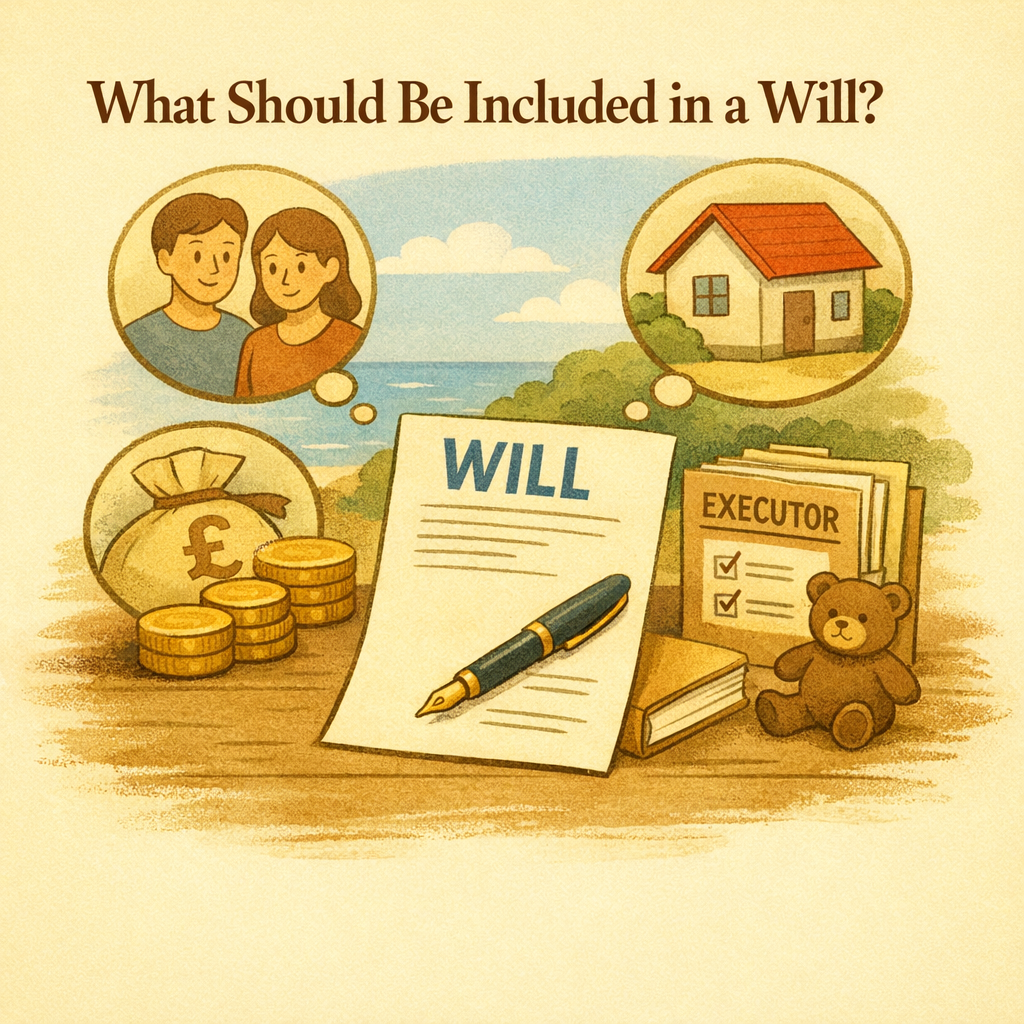
A properly written will does more than pass on money. It gives clear instructions that protect your loved ones and avoid uncertainty.
Your personal details
Your will should clearly identify you by name and address and confirm that you are making the will voluntarily.
Beneficiaries
These are the people or organisations who will receive your estate. This can include family, friends, charities, or a combination of all three.
Property and assets
Your will should explain what happens to your home, savings, investments, personal belongings, and any other assets you own.
Executors
Executors are responsible for carrying out your wishes. Many people choose a family member, friend, or professional.
Guardians for children
If you have children under 18, your will allows you to name guardians to care for them if both parents die.
Funeral wishes
Although not legally binding, many people include guidance on funeral preferences to help loved ones make decisions.
What not to include
Certain assets such as pensions and life insurance usually pass separately, but your will can still work alongside these arrangements.
Summary
A well written will covers your family, your assets, and your wishes clearly. Professional guidance ensures nothing important is missed.