

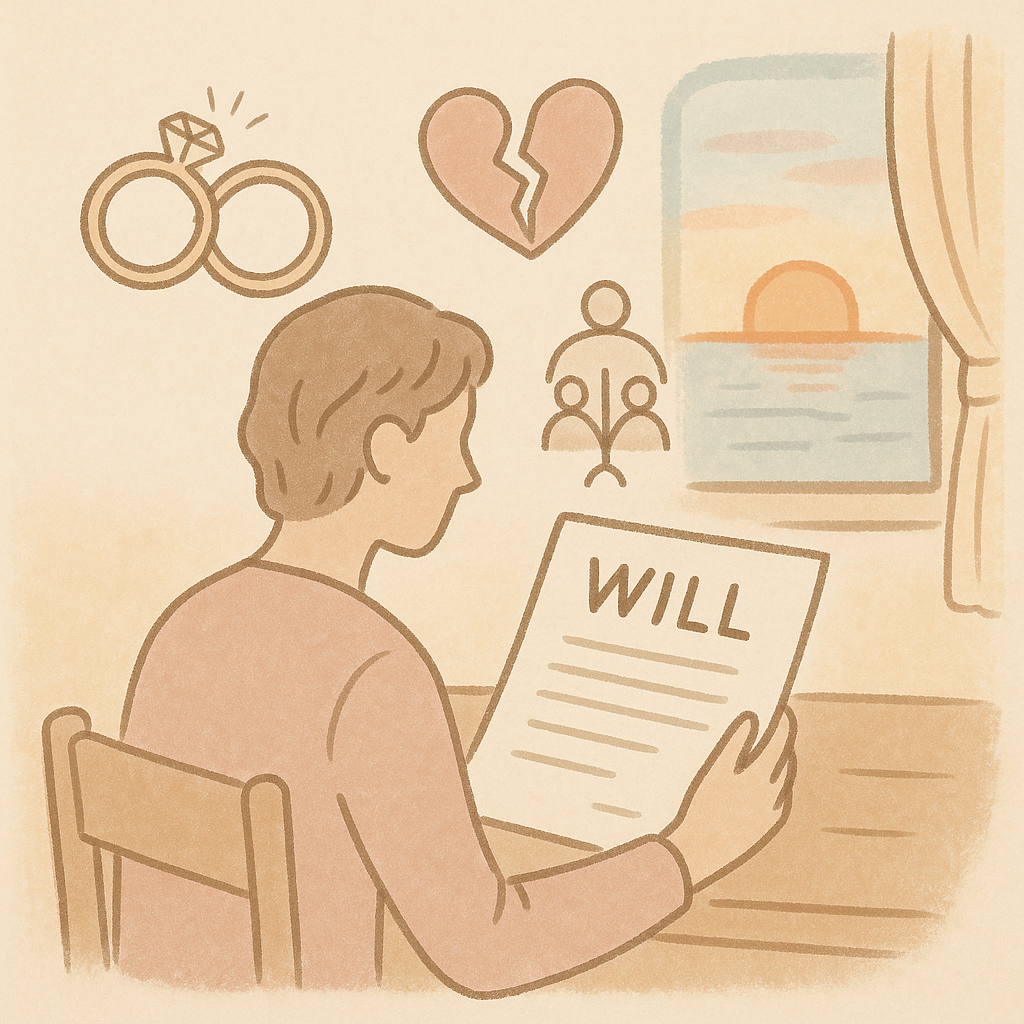
Life changes; and so should your will!
Marriage, civil partnerships, or divorce can all affect whether your will is still legally valid, and whether it reflects your current wishes. Many people are surprised to learn that their old will might no longer apply after a major life event.
At Coastal Legacy, we help clients across Hampshire, Fareham, Gosport, and Portsmouth review and update their wills whenever life takes a new turn.
Here’s how these milestones impact your estate planning.
Marriage or Civil Partnership Cancels a Will
In England and Wales, getting married or entering a civil partnership automatically revokes (cancels) any existing will; unless the will was written “in contemplation of marriage.”
That means your old will is no longer valid, and your estate would instead be distributed according to intestacy laws.
Those rules might not reflect your current wishes; for example, they don’t recognise unmarried partners, stepchildren, or certain friends.
✅ Tip: If you’re planning to get married, it’s best to make a new will in contemplation of marriage, naming your future spouse. That way, it remains valid after your wedding.
What Happens If You Don’t Update Your Will After Marriage
If your old will is cancelled by marriage and you don’t create a new one, your estate will be divided under the intestacy rules.
In many cases, your new spouse will inherit most (or all) of your estate, even if you have children from a previous relationship.
For blended families, this can lead to difficult outcomes that you may not have intended.
Creating a new will ensures your estate is distributed fairly and according to your wishes.
Divorce or Dissolution of Civil Partnership
Divorce does not cancel your will ; but it does change how it’s interpreted.
Once your divorce or civil partnership dissolution is final:
- Any mention of your former spouse or partner in your will is treated as if they had died before you.
- This means they won’t inherit anything, and they can’t act as executor or trustee.
However, if you’ve named them in multiple places, or if your estate depends on joint ownership, things can get complicated.
✅ Tip: After a divorce, always review your will to remove or update any references to your former partner.
Separation (Without Divorce)
If you’ve separated but are not legally divorced, your spouse or civil partner will still inherit under the terms of your will; or under intestacy rules if you haven’t written one.
For this reason, it’s vital to update your will as soon as your circumstances change.
Remarriage and Blended Families
If you remarry, your new spouse becomes your next of kin, and your old will is revoked.
However, many people want to ensure that children from previous relationships still inherit. This can be done through trusts or carefully structured wills.
At Coastal Legacy, we help families balance fairness and clarity, ensuring everyone is looked after.
When to Review Your Will
We recommend reviewing your will:
- Before marriage or civil partnership
- Immediately after divorce or separation
- When forming a new relationship
- Whenever your family circumstances change
A quick review can prevent future confusion and protect your loved ones’ inheritance.
Keep Your Will Up to Date with Coastal Legacy
Life changes; and your will should reflect those changes.
Our team at Coastal Legacy makes updating your will straightforward and affordable. We’ll ensure your document remains legally valid and aligned with your current relationships and intentions.
👉 Contact Coastal Legacy today to review or update your will with expert guidance across Hampshire.